by Jack Norris, Registered Dietitian | Last updated: November 2026
Contents
Essential information
Vegan adults should eat 4 servings of good sources of calcium per day (5 for women over 50 and everyone over 70), and teenagers should eat 6 servings. The image below shows good calcium sources readily available in the United States. The image lists the amount of each food that qualifies as one serving.
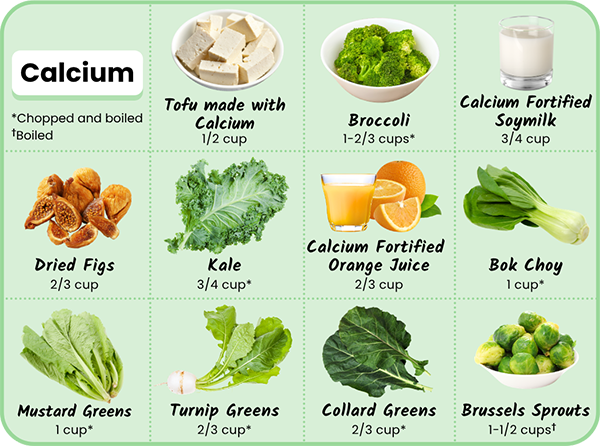
Luckily, most plant-based milks are fortified with calcium. One of our favorite foods for getting calcium is tofu made with calcium salts, which is high in calcium and protein, both of which are good for bones. If eating calcium-rich foods every day is inconvenient, a calcium supplement of about 500 mg per day is another option.
Calcium is only one part of keeping bones strong. Lifting heavy weights twice a week, along with impact exercise such as jumping or running, may be the most reliable way to maintain or increase bone density without medication. Exercise programs built around balance training reduce falls and may reduce fall-related fractures. We encourage everyone to do both. Talk to your health professional about what program is right for you, especially if you already have low bone density.
Note: I used AI for the literature review, data analysis, claim verification, and editing of this article.
This article aims to include research only if it meets a minimum evidentiary bar, which varies by study type: observational studies linking diet and disease must be prospective, and trials must report the outcome they registered in advance. Findings also need a meaningful effect size, and meta-analyses must pool enough studies with consistent results. We list many of the studies we considered but excluded in the Excluded research section, with the reason. Full criteria.
Recommendations
Vegans tend to get less calcium than people who eat dairy. In studies that counted only calcium from food, adult vegans averaged 847 mg per day, compared with 1,093 mg for adult meat-eaters (Bickelmann, 2023). Most of those vegans were in the U.K.’s EPIC-Oxford study, where almost a third of their calcium came from plant milks, mostly fortified ones (Sobiecki, 2016). So vegans who don’t eat calcium-fortified foods likely obtain even less calcium. At this time, we encourage vegans to eat enough good sources of calcium to meet our recommendations, which are based on the U.S. recommended dietary allowance (RDA).
If you’ve heard that animal protein causes osteoporosis by leaching calcium from bones, that countries with the highest dairy intakes have the highest rates of osteoporosis, that the World Health Organization recommends only 500 mg of calcium per day, or that the dairy industry shapes U.S. nutrient recommendations, it might seem odd for a vegan organization to base its calcium recommendations on the U.S. RDA. But the protein and WHO claims are wrong (see below). Comparisons between countries can’t separate dairy from the many other ways countries differ. And the European Food Safety Authority, which has no ties to the U.S. dairy industry, recommends nearly the same amount for adults as the U.S. RDA (950 mg vs. 1,000 mg).
The only study of bone health outcomes in vegans that meets our criteria found that they had a higher rate of hip fracture. The study was observational and can’t prove causation, but lower calcium intake accounted for about a fifth of the difference. Because no fracture studies are good enough to establish calcium requirements, the RDA rests mainly on calcium balance studies. Our recommendations are an honest attempt to support vegans’ bone health with the evidence we have. And resistance and balance exercises may matter as much as, or more than, calcium for preventing fractures.
Calcium recommendations and good plant sources
Table 1 shows the U.S. recommendations, the corresponding absorbed calcium, and the number of servings of good calcium sources we recommend for vegans.
| Age | U.S. RDA (mg) | Absorption assumed | Absorbed calcium (mg) | Servings of good sources for vegans | U.S. upper limit (mg) |
|---|---|---|---|---|---|
| 0–6 months | 200† | – | – | – | 1,000 |
| 7–12 months | 260† | – | – | – | 1,500 |
| 1–3 years | 700 | 45.6% | 319 | 3 | 2,500 |
| 4–8 years | 1,000 | 30% | 300 | 4 | 2,500 |
| 9–13 years | 1,300 | 38% | 494 | 6 | 3,000 |
| 14–18 years | 1,300 | 38% | 494 | 6 | 3,000 |
| 19–50 years | 1,000 | 25% | 250 | 4 | 2,500 |
| 51–70 years, women | 1,200 | 25% | 300 | 5 | 2,000 |
| 51–70 years, men | 1,000 | 25% | 250 | 4 | 2,000 |
| 71 years and older | 1,200 | 25% | 300 | 5 | 2,000 |
| †Adequate intake. The U.S. Recommended Dietary Allowance (RDA) is an intake estimated to meet the needs of ~97.5% of an age group. The RDA for pregnancy and breastfeeding is the same as for other women of the same age. The Daily Value for calcium on food labels in the U.S. is 1,300 mg. Serving sizes are the same for all ages (Table 2). Source: Institute of Medicine, 2011. | |||||
Table 2 lists good sources of calcium among plant foods along with how much absorbable calcium they provide. We define one serving of a good source as the smallest common household measure that provides at least 50 mg of absorbed calcium.
| Food | Amount for 1 serving | Calcium (mg) | Calcium absorbed (mg) |
|---|---|---|---|
| Apple juice, calcium fortified | 1 cup | 130 | 55 |
| Bok choy, shredded, boiled | 1 cup | 158 | 63 |
| Broccoli, chopped, boiled | 1-2/3 cups | 104 | 55 |
| Brussels sprouts, boiled | 1-1/2 cups | 84 | 54 |
| Collard greens, chopped, boiled | 2/3 cup | 179 | 61 |
| Fenugreek leaves (Methii), cooked | 2/3 cup | 256 | 54 |
| Figs, dried | 2/3 cup | 161 | 61 |
| Jute, boiled | 3/4 cup | 138 | 55 |
| Kale, chopped, boiled | 3/4 cup | 133 | 53 |
| Mustard greens, chopped, boiled | 1 cup | 165 | 66 |
| Natto | 1/2 cup | 190 | 59 |
| Orange juice, calcium fortified | 2/3 cup | 167 | 60 |
| Soymilk, calcium fortified | 3/4 cup | 225 | 53 |
| Tofu, firm, Trader Joe’s Organic with calcium sulfate | 1/2 cup | 159 | 60 |
| Turnip greens, chopped, boiled | 2/3 cup | 131 | 53 |
| Water spinach (Ipomoea aquatica), chopped, raw | 1/3 cup | 158 | 63 |
The Calcium and Oxalate Content of Foods tab of our Bone health spreadsheet contains more details on how the absorbed calcium was calculated, along with links to the sources.
How we determined our calcium recommendations for vegans
Ideally, we’d base our adult recommendations on fracture outcomes, but no research that meets our criteria shows how much calcium adults need to prevent fractures. Instead, we follow the RDAs, set by the U.S. Institute of Medicine (IOM), largely from calcium balance studies of people eating typical mixed diets, in which average calcium absorption was about 25% (see p. 38 in IOM, 2011). For adults aged 19–50, the RDA is 1,000 mg, estimated to meet the needs of nearly everyone (about 97.5%) and corresponding to about 250 mg of absorbed calcium. The RDA increases to 1,200 mg for women over 50 and for everyone over 70. The European Food Safety Authority (EFSA) uses one amount for all adults 25 and older, as do the Nordic Nutrition Recommendations (EFSA, 2015; Nordic Council of Ministers, 2023). EFSA reanalyzed the same balance studies as the IOM and found that age didn’t affect calcium needs, but it added studies in which people were given calcium supplements, which the IOM’s analysis had deliberately left out because supplements might bias the results (Hunt, 2007). The IOM added 200 mg for older adults as a precaution, based on bone density and fracture studies, and called its amount for women over 50 notably uncertain (see pp. 359–360 in IOM, 2011). Because it isn’t clear which approach is more correct, we follow the more cautious IOM recommendations, so women over 50 and everyone over 70 should eat one more serving a day (Table 1).
Each good source of calcium in Table 2 provides at least 50 mg of absorbed calcium per serving. Vegans also get calcium from other foods, but how much they obtain from other foods likely varies a lot among people, and calcium absorption from most of these foods hasn’t been measured. We estimate that other foods provide roughly 35 to 100 mg of absorbed calcium per day, so we assume about 50 mg. That leaves about 200 mg of absorbed calcium to get from good sources, so we recommend that adult vegans eat 4 servings of good sources of calcium per day, or 5 for women over 50 and everyone over 70 (Table 1). Our calculations are in the Recommendations tab of our Bone health spreadsheet.
We don’t adjust servings for body size. You might expect larger people to need more calcium, but in calcium balance studies, people’s needs varied about as much per kilogram of body weight as per day (Hunt, 2007), suggesting that body size explains little of the difference.
For children and teenagers, the U.S. recommendations (IOM, 2011) are calculated from estimates of how much calcium white Canadian adolescents add to their bones each day (Vatanparast, 2010), combined with assumptions about absorption and losses; as with adults, there is little robust evidence on how much calcium children and teenagers need for bone density or to prevent fractures. The U.S. recommendations assume that children absorb a higher percentage of calcium than adults do (Table 1), so we assumed that a serving of a good source, and the calcium from other foods, provide more absorbed calcium for a child than for an adult, with a smaller amount from other foods for toddlers, who eat less. For example, a teenager absorbs about 38% of the calcium in a serving instead of 25%, so each serving provides about 76 mg of absorbed calcium rather than 50 mg. Table 1 shows the results.
As an aside, it’s often claimed that the World Health Organization recommends 500 mg of calcium per day for adults, but that isn’t the case; it recommends 1,000 mg for adults, and 1,300 mg for women after menopause and for everyone over 65 (WHO, 2004).
Safety of calcium supplements
Summary: For most people, calcium supplements of 500 to 1,000 mg a day appear to be safe. The best research found no increase in heart disease, at least in women; there’s less research on men. Calcium with vitamin D may slightly raise the risk of kidney stones, although the European Food Safety Authority found no established link. Calcium can reduce how much iron you absorb from a meal and interfere with a few medicines, so timing matters (see below). Since supplements also do little to prevent fractures in most people (see Do calcium and vitamin D supplements prevent fractures?), we recommend getting calcium from foods, such as fortified plant milks and calcium-set tofu, when you can, and using a supplement only to make up the difference; don’t go well beyond the recommended intake without medical advice. People with chronic kidney disease should talk to their physicians about calcium supplements.
Heart disease. In the largest trial, the Women’s Health Initiative, 36,282 postmenopausal women took 1,000 mg of calcium plus 400 IU of vitamin D a day, or a placebo, for 7 years. Heart attacks and deaths from heart disease were no more common with calcium (HR 1.04, CI 0.92–1.18), and neither were strokes (0.95, CI 0.82–1.10), including among women who took at least 80% of their pills (Hsia, 2007). Heart disease wasn’t the trial’s main outcome, but it was planned in advance as a secondary outcome, and every event was confirmed from medical records. Women were also allowed to take their own calcium supplements, and more than half took their own calcium or vitamin D, which could have hidden a small effect. A later reanalysis of the women who weren’t taking their own calcium found slightly higher rates for 3 of 8 heart and stroke outcomes, but these were barely statistically significant and wouldn’t hold up after accounting for the number of outcomes tested, so it doesn’t meet our criteria (Bolland, 2011).
Studies of people who chose to take supplements point the same way. In the Nurses’ Health Study, women taking 501 to 1,000 mg a day from supplements had no higher rate of heart disease or stroke than women taking none (Paik, 2014). In a study of 388,229 older Americans, supplements weren’t associated with death from heart disease or stroke in women (Xiao, 2013). In men taking more than 1,000 mg a day, the rate was slightly higher (RR 1.20), but that’s too small to tell apart from other differences between people who do and don’t take supplements. In the Framingham Heart Study, calcium from supplements or foods wasn’t linked to calcium buildup in the arteries of the heart about 4 years later, including at more than 500 mg a day from supplements (Samelson, 2012). In a Swedish study of 61,433 women, calcium supplements, mostly low-dose multivitamins, weren’t associated with death from heart disease, but women who got 1,400 mg or more of calcium a day from food had a higher rate of death from heart disease than those who got 600 to 999 mg (HR 2.14) (Michaëlsson, 2013).
The European Food Safety Authority, an independent expert body, also concluded that no link has been established between long-term calcium intake from food and supplements and heart disease (EFSA, 2012a).
So there’s no reason to believe that calcium supplements of 500 to 1,000 mg a day harm the heart, at least in women. For men, a small increase can’t be ruled out, but there’s less evidence, and very high intakes may be harmful. We recommend using supplements to fill the gap up to the recommended intake, but not to go well beyond it.
Kidney stones. The U.S. Preventive Services Task Force, an independent panel of national experts, concluded that taking calcium with vitamin D slightly increases the risk of kidney stones: about 1 extra person with a stone for every 273 women who took the supplements for 7 years (U.S. Preventive Services Task Force, 2018). That conclusion is based on a trial that doesn’t meet our criteria, because kidney stones weren’t one of its main outcomes (Jackson, 2006). The European Food Safety Authority reviewed the same trial and concluded that no link has been established between long-term calcium intake from food and supplements and kidney stones (EFSA, 2012a).
Iron. Calcium can reduce how much iron is absorbed from a meal. However, the European Food Safety Authority concluded that this effect “has not been observed in long-term observational and intervention studies at dietary calcium intakes in the range of current recommendations or at supplemental calcium intakes up to 2,000 mg/day in adults” (EFSA, 2012a). If your iron stores are low or you take an iron supplement, take your calcium supplement with the meal that has the least iron, and not at the same time as the iron supplement (Cook, 1991).
Medicines. As of November 2026, the following drugs were considered to interact with calcium supplements and should be taken apart from them, but check for current information and with your physician: levothyroxine, a thyroid hormone (AbbVie, 2024); ciprofloxacin, an antibiotic (Bayer, 2026); tetracycline antibiotics, such as doxycycline (Mayne Pharma, 2025); and alendronate (Fosamax), an osteoporosis drug (Organon, 2026).
Resistance training and impact exercise
Lifting weights that are heavy for you, plus jumping or other impact exercise, is the type of exercise most likely to help bones. Walking, swimming and cycling have little or no effect on bone density, and the people who respond most are those with the lowest bone mass or the least previous exercise (Exercise and Sports Science Australia (ESSA), 2017).
Before starting. If you have low bone mineral density, talk to your physician before beginning a resistance training program. Bending your spine forward while lifting a load can fracture weakened vertebrae, so avoid rounding it under load, especially if you have spinal osteoporosis or a stooped upper back (ESSA, 2017).
What the guidelines recommend. Progressive resistance training (lifting weights or using machines and gradually increasing the weight as you get stronger). Australian guidelines recommend 2–3 sets of 8 repetitions at 80–85% of your one-repetition maximum (the most you could lift once), twice a week (ESSA, 2017). UK guidelines recommend building up to 3 sets with a weight you can lift only 8–12 times, 2 to 3 days a week (Royal Osteoporosis Society (ROS), 2022). Korean guidelines recommend 50–85% of your maximum, 5–12 repetitions, 2 to 3 days a week (Korean Society for Bone and Mineral Research (KSBMR), 2023). All 3 describe heavier loads as more effective for bone density. For impact exercise, the guidelines suggest starting with about 10 jumps per session and working up to about 50, several days a week, beginning with gentler impacts if you are frail or have arthritis (ESSA, 2017; KSBMR, 2023). Running and jogging also count as moderate impact exercise (ROS, 2022), but because bone adapts to the loading it’s used to, the Australian guidelines suggest also including impacts from different directions, such as hops and side steps (ESSA, 2017).
These are position and consensus statements that draw on many small trials and meta-analyses. The Australian authors note that no study has had enough participants and duration to determine the best regimen (ESSA, 2017), and the UK authors note that there is a lack of trials with fractures as the main outcome (ROS, 2022). Table 3 describes 2 trials of heavy lifting in people with low bone mass.
| LIFTMOR (Watson, 2018) | FrOST (Kemmler, 2020a) | |
|---|---|---|
| Participants | 101 postmenopausal women over 58 with low bone mass; 86 completers | 43 sedentary men aged 73–91 with low bone mass and low muscle mass; 39 completers |
| Program | Started with body weight and light loads. Deadlift, overhead press and back squat, 5 sets of 5 repetitions each at over 80–85% of one rep max, plus jumping chin-ups with drop landings (grab an overhead bar, jump while pulling up, then drop to the floor, landing as heavily as comfortable). Supervised group sessions lasted 30 minutes, twice a week, for 8 months. |
After a 12-week introduction to the machines and technique (lighter, 8–15 reps per set): 1 set of each of 14 machine exercises (leg press, rows, bench press and others), 5–10 repetitions usually stopping 1–2 short of failure, later some sets to the last repetition they could complete properly, plus supersets and drop sets, some up to 18 slow repetitions. Peak sets were about 85% of one-rep max. Both groups also took whey protein, vitamin D, and calcium, with the exercise group taking more protein. Supervised sessions lasted about 47 minutes, twice a week, for 12 months, continuing to 18 months. |
| Comparison | Unsupervised home program with light weights | No exercise |
| Results (exercisers vs. controls) | Benefits at the lower spine and hip (femoral neck); far fewer exercisers lost spine bone density. | Benefit at the lower spine at 12 months. At 18 months, benefits at the lower spine and hip, plus a combined score of muscle mass, grip strength and walking speed. |
In both trials, bone density fell in the control groups while it was maintained or increased in the exercisers.
Supervision and getting started. Both trials were supervised. Most people won’t have that, but supervision probably helps people push hard enough. The guideline authors also recommend it for technique and safety, especially if you have osteoporosis, have had a fracture or are new to heavy lifting (ESSA, 2017; ROS, 2022). Start with light weights and add weight gradually. You don’t need to test your one-repetition maximum: choose a weight you can lift 8–12 times such that the last repetitions are difficult.
Falls and fractures. More than 95% of hip fractures follow a fall, so strength and balance matter as well as bone density (ESSA, 2017). A Cochrane review of 108 trials in adults aged 60 and older living in the community found that exercise reduced the number of people who fell by 15% (RR 0.85, CI 0.81–0.89) and may reduce the number who had a fall-related fracture (RR 0.73, CI 0.56–0.95; 10 trials, 4,047 participants), though the fracture evidence was low certainty. The programs that reduced falls were mainly balance and functional exercises (Sherrington, 2019). For people more likely to fall, about 14 would need to exercise for a year to prevent 1 person from falling (in the trials, about 480 of every 1,000 people in the control groups fell within a year, and exercise meant about 72 fewer fallers; 1000/72=13.9).
Balance. The UK guidelines recommend balance and strength exercise, such as tai chi, dance, yoga, or Pilates, at least twice a week to reduce falls, along with exercises that strengthen the back and improve posture (ROS, 2022). People with spinal osteoporosis should avoid deep forward bends, which include some yoga poses (ESSA, 2017).
Bone density testing and medications
Unlike lifestyle factors, medications have been tested in trials large enough to have fracture reduction as the main outcome. Whether to take one is a decision to make with a physician; this section is a brief overview.
Bone density testing. The U.S. Preventive Services Task Force recommends a bone density test (a DXA scan) for women 65 and older, and for postmenopausal women under 65 whose risk is increased. For women under 65, it suggests first looking for risk factors, which include low body weight, a parent who broke a hip, smoking, and excess alcohol consumption, and then using a risk calculator, such as FRAX, to decide who should be tested. It found too little evidence to recommend for or against testing men (U.S. Preventive Services Task Force, 2025). A vegan diet isn’t one of the listed risk factors, but because vegans in EPIC-Oxford had a higher rate of hip fractures, vegans may want to mention their diet when they talk with their physician about testing.
Medications. Bisphosphonate drugs, taken orally or by infusion, act by inhibiting bone resorption. Hormone therapy (estrogen, with or without a progestin) prevents bone loss and fractures after menopause. Its risks depend on the type, dose, and duration, as well as a woman’s age and time since menopause when she starts it (North American Menopause Society, 2022). Women should ask their physicians whether they’re candidates for these or other medications.
Research
In the How we determined our calcium recommendations for vegans box above, we explained how we base our recommendations. However, a few issues are worth a closer look: protein; calcium and vitamin D supplements; studies of vegans, especially EPIC-Oxford; and whether calcium intake reduces the risk of colorectal cancer.
Protein
There’s a popular view that animal protein causes calcium to be lost from bones. The idea is that protein, especially animal protein, makes the body more acidic through the sulfate produced from its sulfur-containing amino acids; to buffer that acid, calcium is pulled from bone and then lost in the urine. It’s true that higher protein intake increases calcium loss via urine. However, none of 5 well-controlled studies measuring calcium balance found that higher protein intake or replacing soy with meat led to calcium loss (Fenton, 2009). One possible explanation is that higher protein intake also increases calcium absorption, which may offset the extra calcium lost in urine (Kerstetter, 2005; Hunt, 2009). In a later systematic review of human and laboratory studies, the same researchers concluded that the evidence doesn’t support dietary acid load as a cause of osteoporosis (Fenton, 2011).
The German Nutrition Society, reviewing the research for its dietary guidelines, rated the evidence on protein intake and bone health as insufficient for nearly every outcome. In the research it reviewed, plant and animal protein had similar effects on bone, though it also rated that evidence as insufficient (German Nutrition Society, 2023). The European Food Safety Authority, in setting protein requirements, also concluded that the evidence on protein and bone health was insufficient, and that intakes up to twice the recommended amount are safe for adults (EFSA, 2012b).
For healthy adults, there’s no reason to believe that eating more protein than the RDA harms bones, and not enough evidence to say that it helps. We recommend that vegans get 1 g of protein per kg of body weight per day. For how many grams that is at different body weights, see Table 1 in Protein requirements.
Do calcium and vitamin D supplements prevent fractures?
A 2026 meta-analysis of 69 randomized trials, mostly in people not at high risk of fracture, found that calcium alone and vitamin D alone didn’t reduce fractures, and that calcium plus vitamin D reduced them only slightly, an effect that disappeared when 1 trial in very high-risk nursing home residents was removed (Massé, 2026). Only 14 of the trials had average calcium intakes below 800 mg a day, and none studied vegans, so they can’t tell us whether supplements help people with low intakes. For vegans who can’t meet our calcium recommendations with food, a supplement is a reasonable way to fill the gap.
Studies on vegans
The only finding on vegans’ bone health that meets our criteria comes from a large U.K. study, EPIC-Oxford, in which vegans had higher rates of hip fractures than meat-eaters. Lower calcium and protein intake accounted for some of the difference. Other fracture studies and all bone mineral density studies don’t meet our criteria for research inclusion (see How We Evaluate Research).
A word about observational research: it can show associations but can’t prove causation. The link between vegan diets and hip fractures in EPIC-Oxford doesn’t mean the diet caused the fractures; something else about the people who chose vegan diets could explain some or all of the difference. But the diet could also be the main cause; we don’t know yet. The association was large and held up after adjusting for lifestyle factors and BMI, which makes it less likely to be explained entirely by other differences. We don’t say this to wish away EPIC-Oxford’s results, but to put them in perspective. Until more is known, they’re a good reason for vegans to make an effort to meet calcium recommendations.
Bone mineral density. Many studies have found that vegans have slightly lower bone mineral density than meat-eaters, but nearly all have been cross-sectional, which doesn’t meet our criteria. The 2 with a longitudinal component followed only 5 or 6 vegan women for about a year and found no significant difference in changes in bone mineral density (Barr, 1998; Outila, 2000). Two other cross-sectional studies, one of bone ultrasound and one of bone turnover markers, also didn’t meet our criteria (Menzel, 2021; Hansen, 2018).
EPIC-Oxford. EPIC-Oxford followed about 55,000 people in the U.K., including 1,982 vegans (1,266 women and 716 men), for an average of 17.6 years and identified fractures through hospital and death records (Tong, 2020).
After adjusting for lifestyle factors, vegans had a higher rate of hip fractures than meat-eaters (HR 2.64, CI 1.90–3.67). A low-trauma hip fracture is enough to diagnose osteoporosis, even without a bone density test (Siris, 2014). Vegans tend to be leaner, and after adjusting for body mass index (BMI), the difference narrowed slightly (HR 2.31, CI 1.66–3.22). Lower BMI may partly reflect a vegan diet, so adjusting for it may hide some of the diet’s effect. Using the hazard ratio before adjusting for BMI, that’s about 19 (CI 10–30) more hip fractures per 1,000 vegans over 10 years, or 1 extra hip fracture per 54 (CI 33–98) vegans over 10 years (1 ÷ (1 − (1 − 0.0115)^2.64 − 0.0115) = 54). The BMI-adjusted difference narrowed after also adjusting for calcium (HR 1.97), protein (HR 2.21), or both (HR 1.94). EPIC-Oxford didn’t have data on calcium supplements, so its calcium adjustments include only calcium from food.
Using the hip fracture hazard ratios in Tong, 2020, we estimate that dietary calcium accounted for about 21% of the difference between vegans and meat-eaters, dietary protein about 6%, and the two together about 23%. BMI accounted for about another 20%, but it isn’t known how much of vegans’ lower BMI results from their diet. After adjusting for BMI, calcium, and protein, about 57% of the difference remained, unexplained by anything the authors tested (calculations from the HRs in Tong’s Table 2, each divided by vegans’ excess risk, 2.64−1.00=1.64: BMI, (2.64−2.31)/1.64=20%; calcium, (2.31−1.97)/1.64=21%; protein, (2.31−2.21)/1.64=6%; calcium and protein together, (2.31−1.94)/1.64=23%; remaining, (1.94−1.00)/1.64=57%). The authors didn’t include calcium from supplements because data weren’t available. They suggested further studying vitamin D, B12, IGF-1, and muscle strength as potential explanations (Tong, 2020). These estimates are rough: they depend on the order in which the factors were added, and the authors noted that questionnaire estimates of calcium and protein intake have substantial error and that the role of calcium may have been underestimated (Tong, 2020).
In EPIC-Oxford, the average BMI of vegans was 21.9 for women and 22.5 for men, compared with 24.3 and 24.9 for meat-eaters (Tong, 2020, Table S2). When asked whether vegans with the lowest BMIs (and, separately, calcium intakes) were driving the results, an EPIC-Oxford researcher replied that the main associations “could not be driven by the extreme categories, which we checked for in preliminary analyses”; those results haven’t been published (Tong, personal communication, December 9, 2020).
Vegans also had more fractures overall (HR 1.50, or 1.43 after adjusting for BMI), but the difference is too small to meet our criteria. They also had more leg fractures (HR 2.04, or 2.05 after adjusting for BMI), but that result doesn’t hold up after correcting for all 21 comparisons (7 fracture sites and 3 diet groups compared with meat-eaters), so we consider it tentative (p≈0.006 vs. a corrected cutoff of 0.05/21=0.0024). The hip fracture result is far stronger (p<0.000001).
Vegans in EPIC-Oxford had lower average blood vitamin D levels than meat-eaters: 56 nmol/L (22 ng/mL) vs. 77 nmol/L (31 ng/mL) (Crowe, 2011, Table 4). Blood levels measured in EPIC-Oxford may run higher than levels from other assays (Roddam, 2007), so they shouldn’t be compared with the IOM’s target of 50 nmol/L (20 ng/mL) (IOM, 2011, pp. 387–388). We don’t think vitamin D explains vegans’ higher fracture rate: in EPIC-Oxford, blood levels weren’t associated with fractures, including levels below 50 nmol/L (20 ng/mL) (Roddam, 2007), and trials of vitamin D alone haven’t found fewer fractures, even when baseline levels were below 50 nmol/L (20 ng/mL) (Massé, 2026, Table S13).
Vegans tend to have lower blood levels of vitamin A than meat-eaters (Schüpbach, 2017; Dawczynski, 2022), and we also looked at zinc and selenium, but we found no studies meeting our criteria linking any of the three to fractures. Vegans should still meet the RDA for vitamin A by eating carotenoid-rich foods such as carrots, sweet potatoes, and dark leafy greens. They should also get enough zinc and, in countries with low-selenium soil, take a multivitamin with selenium (see Nutrition Tips for Vegans).
Vitamin K. Vitamin K comes in 2 main forms. K1 is found mainly in leafy green vegetables. K2 is found mainly in animal foods, especially cheese and other dairy foods. Among plant foods, natto, a traditional fermented soy food in Japan, is the only rich source of K2. K2 is also made by bacteria in the human gut (Booth, 2012; NIH Office of Dietary Supplements). The Adequate Intake for vitamin K is 120 µg/day for men and 90 µg/day for women (NIH Office of Dietary Supplements); there is no separate recommendation for K1 or K2.
In a 3-year randomized trial, 500 µg/day of K1, an amount attainable in the diet, didn’t change bone density (Booth, 2008). A 2-year trial of a much larger dose, 5 mg/day, in 440 postmenopausal women with osteopenia also found no difference in bone density (Cheung, 2008).
Some people argue that dietary K2 is necessary for optimal bone health, and most vegans get practically no K2. Data on how much K2 meat-eaters get are limited, but a sample of Dutch women had an intake of about 30 µg/day, primarily from cheese, other dairy, and meat (Beulens, 2009; Gast, 2009). Vitamin K helps activate osteocalcin, a bone protein (NIH Office of Dietary Supplements), and some trials of K2 supplements have reported benefits for bones, which is part of why K2 gets so much attention. None of those trials met our criteria (Knapen, 2013), nor did others that found no benefit (for example, Rønn, 2021). Two trials did meet our criteria, and neither found an overall difference in bone density. One gave MK-7 at 50 or 90 µg/day, about 2 to 3 times the typical intake from food, for 1 year to 311 adults aged 50 to 75 (Zhang, 2020). Another study gave a pharmaceutical dose of MK-4 (45 mg/day, about 1,500 times the typical intake) or 1 mg/day of K1 for 18 months to 105 women with osteoporosis who were taking bisphosphonates (Moore, 2023). Whether to take pharmaceutical doses is a medical decision to discuss with a physician.
We’d need a clinical trial in vegans to be certain if a lack of 30 µg/day of K2 puts them at a disadvantage for bone health compared to meat-eaters. We think it’s unlikely, but K2 supplements are relatively inexpensive for anyone who wants to be prudent.
Other studies. Other studies of fracture rates in vegans (Thorpe, 2021; Webster, 2022; Webster, 2023; Ho-Pham, 2012) did not meet our criteria. The reasons are given in Excluded research. An earlier report from EPIC-Oxford, which covered only the first 5 years and relied on self-reported fractures, has been superseded by the 2020 analysis (Appleby, 2007).
Calcium and colorectal cancer
Higher calcium intakes — around 1,000 mg/day — are consistently associated with lower colorectal cancer risk in observational studies, and the World Cancer Research Fund rates the evidence for causality as “probable.” Randomized trials have been largely disappointing, however, possibly because they’re too short to capture a process that unfolds over decades or because participants already have adequate calcium intakes at baseline. See Calcium and colorectal cancer.
For vegans, aiming to meet our recommendations is worth prioritizing for bone health and could also provide some protection against colorectal cancer.
Citations
AbbVie Inc. SYNTHROID (levothyroxine sodium) tablets, for oral use: prescribing information. Revised February 2024. Accessed November 7, 2026. | FDA-approved drug label. Not evaluated against our criteria. Take at least 4 hours apart from calcium and iron supplements and antacids.
Appleby PN, Crowe FL, Bradbury KE, Travis RC, Key TJ. Mortality in vegetarians and comparable nonvegetarians in the United Kingdom. Am J Clin Nutr. 2016 Jan;103(1):218-30. | Cited for all-cause mortality only, to show that deaths before a fracture were similar across diet groups. Not evaluated against our criteria.
Bayer HealthCare Pharmaceuticals. CIPRO (ciprofloxacin hydrochloride) tablets and oral suspension: prescribing information. Effective March 2026. Accessed November 7, 2026. | FDA-approved drug label. Not evaluated against our criteria. Take at least 2 hours before or 6 hours after products containing calcium, iron or zinc.
Beulens JW, Bots ML, Atsma F, Bartelink ML, Prokop M, Geleijnse JM, Witteman JC, Grobbee DE, van der Schouw YT. High dietary menaquinone intake is associated with reduced coronary calcification. Atherosclerosis. 2009 Apr;203(2):489-93. | Cross-sectional study of 564 postmenopausal Dutch women. We cite it only for typical dietary K2 intake (mean 31.6 µg/day) and its food sources, not for its coronary calcification findings.
Bickelmann FV, Leitzmann MF, Keller M, Baurecht H, Jochem C. Calcium intake in vegan and vegetarian diets: A systematic review and Meta-analysis. Crit Rev Food Sci Nutr. 2023;63(31):10659-10677. | Meta-analysis of observational studies (PROSPERO-registered; no funding). Adults: vegans 729 mg/day vs. meat-eaters 993 (21 studies, 27 comparisons, SMD -0.70, I2 93%); vegetarians 909 vs. meat-eaters 881 (no difference). Calcium from food only (studies that excluded supplement users or their supplement data): vegans 847 vs. meat-eaters 1,093 (6 comparisons, 952 vegans, I2 about 0%). Studies that counted supplements: vegans 777 vs. 987 (10 comparisons). By publication year: vegans 645 before 2010 and 776 since, not significantly different. It describes intakes rather than testing an effect, so we cite it despite the high heterogeneity overall.
Booth SL, Dallal G, Shea MK, Gundberg C, Peterson JW, Dawson-Hughes B. Effect of vitamin K supplementation on bone loss in elderly men and women. J Clin Endocrinol Metab. 2008 Apr;93(4):1217-23. | Randomized trial of 500 µg/day of vitamin K1 vs. none for 3 years in 452 healthy men and women aged 60–80, all given calcium and vitamin D. Bone density did not differ at the hip, spine or whole body. The registered primary outcome (hip bone density) matches the paper. Null result.
Booth SL. Vitamin K: food composition and dietary intakes. Food Nutr Res. 2012;56. | Review of vitamin K in foods. We cite it for the food sources of K2: natto is the rich source of MK-7, and some cheeses contain MK-8 and MK-9.
Cheung AM, Tile L, Lee Y, Tomlinson G, Hawker G, Scher J, Hu H, Vieth R, Thompson L, Jamal S, Josse R. Vitamin K supplementation in postmenopausal women with osteopenia (ECKO trial): a randomized controlled trial. PLoS Med. 2008 Oct 14;5(10):e196. | Randomized trial of 5 mg/day of K1 vs. placebo in 440 postmenopausal women with osteopenia, for 2 years (up to 4 years for some). The primary outcomes, bone density at the lumbar spine and total hip at 2 years, did not differ. Fewer women taking K1 had clinical fractures (9 vs. 20), but fractures were a secondary outcome, and the trial wasn’t powered to test them.
Cook JD, Dassenko SA, Whittaker P. Calcium supplementation: effect on iron absorption. Am J Clin Nutr. 1991 Jan;53(1):106-11. | Single-meal absorption study in 61 healthy volunteers using radioactive iron. Calcium carbonate, citrate and phosphate supplements (600 mg of calcium) all reduced absorption of iron from a meal: by 28% from a meal high in available iron and low in calcium, and by 55% from a breakfast low in available iron and high in calcium. Calcium supplements taken with an iron supplement also generally reduced its absorption, though results varied by calcium form and the groups were small. It measured absorption from single meals, not long-term iron status. Funded by the National Institutes of Health and the US Agency for International Development.
Crowe FL, Steur M, Allen NE, Appleby PN, Travis RC, Key TJ. Plasma concentrations of 25-hydroxyvitamin D in meat eaters, fish eaters, vegetarians and vegans: results from the EPIC-Oxford study. Public Health Nutr. 2011 Feb;14(2):340-6. | Cross-sectional; cited for blood levels only.
Dawczynski C, Weidauer T, Richert C, Schlattmann P, Dawczynski K, Kiehntopf M. Nutrient Intake and Nutrition Status in Vegetarians and Vegans in Comparison to Omnivores – the Nutritional Evaluation (NuEva) Study. Front Nutr. 2022 May 16;9:819106. | Cross-sectional; cited for blood levels only.
EFSA Panel on Dietetic Products, Nutrition and Allergies (NDA). Scientific Opinion on the Tolerable Upper Intake Level of calcium. EFSA Journal. 2012;10(7):2814. | Cited in the text as EFSA, 2012a. We cite it for its conclusion that calcium’s interference with iron and zinc absorption in short-term and single-dose studies hasn’t been seen in long-term studies, at supplemental intakes up to 2,000 mg/day in adults (section 3.2.5, p. 19).
EFSA Panel on Dietetic Products, Nutrition and Allergies (NDA). Scientific Opinion on Dietary Reference Values for protein. EFSA Journal. 2012;10(2):2557. | Cited in the text as EFSA, 2012b. We cite it for its conclusions that the evidence on protein intake and bone health was insufficient to use in setting protein requirements, and that for adults, an intake of twice the Population Reference Intake of 0.83 g/kg body weight per day is considered safe.
EFSA Panel on Dietetic Products, Nutrition and Allergies (NDA). Scientific Opinion on Dietary Reference Values for calcium. EFSA Journal. 2015;13(5):4101. | We cite it for using one Population Reference Intake (PRI) for calcium, 950 mg/day, for all adults age 25 and older, with no increase for older adults (Table 8, p. 40). Its reanalysis of the North American balance studies added studies in which people were given calcium supplements, left out adults under 25, and found no effect of age, sex or body weight (p. 32; Appendix F, p. 70).
Exercise and Sports Science Australia; Beck BR, Daly RM, Singh MA, Taaffe DR. Exercise and Sports Science Australia (ESSA) position statement on exercise prescription for the prevention and management of osteoporosis. J Sci Med Sport. 2017 May;20(5):438-445. | Position statement from Exercise and Sports Science Australia. It recommends high-intensity progressive resistance training (80–85% of the one-repetition maximum, 2–3 sets of 8 repetitions, twice a week) and impact exercise (about 50 jumps per session, 4–7 days a week) for people at risk of fracture. It states that no study has had enough participants and duration to determine the best regimen, and that there is little experimental evidence that exercise prevents fractures. Not evaluated against our criteria.
Fenton TR, Lyon AW, Eliasziw M, Tough SC, Hanley DA. Meta-analysis of the effect of the acid-ash hypothesis of osteoporosis on calcium balance. J Bone Miner Res. 2009 Nov;24(11):1835-40. | Meta-analysis of the 5 randomized crossover calcium balance studies (of 16 found) that followed IOM methods for calcium studies; they changed the amount (0.7 to 2.1 g/kg) or type (meat, soy, milk, lentils) of protein. Higher acid excretion increased urinary calcium but was not associated with calcium balance (77 comparisons, p = 0.38, power 94%); none of the individual studies found a change in balance. Heterogeneity and publication bias were not reported. Only adequate vs. high protein intakes were compared. Funded by University of Calgary and Alberta Heritage Fund fellowships; no conflicts reported.
Fenton TR, Tough SC, Lyon AW, Eliasziw M, Hanley DA. Causal assessment of dietary acid load and bone disease: a systematic review & meta-analysis applying Hill’s epidemiologic criteria for causality. Nutr J. 2011 Apr 30;10:41. | Systematic review of 55 studies (36 in humans, 19 cell studies) applying Hill’s criteria for causality. Concluded that a causal link between dietary acid load and osteoporosis is not supported. Funded by University of Calgary and Alberta Heritage Fund fellowships; the funders had no role in the study. The abstract lists 11 cohort studies, which appears to be a typo; the Results and the flow diagram (Figure 1) list 12, which matches the total of 55.
Gast GC, de Roos NM, Sluijs I, Bots ML, Beulens JW, Geleijnse JM, Witteman JC, Grobbee DE, Peeters PH, van der Schouw YT. A high menaquinone intake reduces the incidence of coronary heart disease. Nutr Metab Cardiovasc Dis. 2009 Sep;19(7):504-10. | Prospective study of 16,057 postmenopausal Dutch women. We cite it only for typical dietary K2 intake (mean 29.1 µg/day), not for its heart disease findings. It comes from the same cohort as Beulens, 2009.
German Nutrition Society; Zittermann A, Schmidt A, Haardt J, Kalotai N, Lehmann A, Egert S, Ellinger S, Kroke A, Lorkowski S, Louis S, Schulze MB, Schwingshackl L, Siener R, Stangl GI, Volkert D, Watzl B, Bischoff-Ferrari HA. Protein intake and bone health: an umbrella review of systematic reviews for the evidence-based guideline of the German Nutrition Society. Osteoporos Int. 2023 Aug;34(8):1335-1353. | Umbrella review of 11 systematic reviews, done for the German Nutrition Society’s evidence-based guideline. Every meta-analysis it included pooled fewer than 10 studies, so none clears our criteria on its own; we cite it only for the society’s overall rating of the evidence as insufficient for nearly every outcome.
Hsia J, Heiss G, Ren H, Allison M, Dolan NC, Greenland P, Heckbert SR, Johnson KC, Manson JE, Sidney S, Trevisan M; Women’s Health Initiative Investigators. Calcium/vitamin D supplementation and cardiovascular events. Circulation. 2007 Feb 20;115(7):846-54. | Randomized, placebo-controlled trial (Women’s Health Initiative, NCT00000611) of 1,000 mg calcium carbonate plus 400 IU vitamin D3 a day in 36,282 postmenopausal women for an average of 7 years. Heart disease was a prespecified secondary outcome, and events were confirmed by medical record review. Heart attack or coronary death HR 1.04 (CI 0.92–1.18); stroke 0.95 (CI 0.82–1.10); in women who took at least 80% of their pills, 1.05 (CI 0.88–1.25) and 0.97 (CI 0.79–1.20). Women could also take their own calcium supplements. Funded by the National Heart, Lung, and Blood Institute; the pills were made by GlaxoSmithKline, and the lead author had a research grant from GlaxoSmithKline.
Hunt CD, Johnson LK. Calcium requirements: new estimations for men and women by cross-sectional statistical analyses of calcium balance data from metabolic studies. Am J Clin Nutr. 2007 Oct;86(4):1054-63. | We cite it because people’s calcium needs varied about twofold whether they were expressed per day (neutral balance at 741 mg/day; 95% prediction interval 507 to 1,035) or per kilogram of body weight (9.4 mg/kg/day; 6.4 to 12.9), and neither age nor sex affected these estimates (p. 1054).
Hunt JR, Johnson LK, Fariba Roughead ZK. Dietary protein and calcium interact to influence calcium retention: a controlled feeding study. Am J Clin Nutr. 2009 May;89(5):1357-65. | Controlled feeding study of 27 postmenopausal women, randomly assigned to about 675 or 1,510 mg/day of calcium, who ate low-protein (10% of energy) and high-protein (20%, mostly meat) diets for 7 weeks each, in random order. On the lower-calcium diet (13 women), the high-protein diet raised the percentage of calcium absorbed from 26.0% to 29.5%; the extra 17 mg/day absorbed wasn’t statistically significant, but it nearly offset a 23 mg/day rise in urinary calcium (Tables 3 and 4, pp. 1360 and 1362). Protein didn’t affect absorption on the higher-calcium diet. Funded by the USDA and partly by the National Cattlemen’s Beef Association and the North Dakota Beef Commission.
Institute of Medicine. Dietary Reference Intakes for Calcium and Vitamin D. Ross AC, Taylor CL, Yaktine AL, Del Valle HB, editors. Washington, DC: National Academies Press; 2011. | Calcium absorption for adults on p. 38.
Kemmler W, Kohl M, Fröhlich M, Jakob F, Engelke K, von Stengel S, Schoene D. Effects of High-Intensity Resistance Training on Osteopenia and Sarcopenia Parameters in Older Men with Osteosarcopenia-One-Year Results of the Randomized Controlled Franconian Osteopenia and Sarcopenia Trial (FrOST). J Bone Miner Res. 2020 Sep;35(9):1634-1644. | Randomized trial of 12 months of supervised machine-based resistance training (1 set of each of 14 exercises, twice a week, peak sets about 85% of the one-repetition maximum) vs. no exercise in 43 sedentary men aged 73–91 with low bone mass and low muscle mass. Both groups took whey protein, vitamin D and calcium. Lumbar spine bone density (by CT scan) rose 2.9 mg/cm³ in the exercisers and fell 4.1 mg/cm³ in the controls (difference 7.0, CI 2.2–11.8). The trial was small, and protein intake was higher in the exercise group (1.59 vs. 1.23 g/kg/day). A commercial gym chain provided the facilities and helped supervise. The trial continued to 18 months, and the final report found similar results with standard bone density scans (DXA), but it didn’t report the registered primary outcome, spine bone density by CT at 18 months (Kemmler, 2020b).
Kemmler W, Kohl M, Jakob F, Engelke K, von Stengel S. Effects of High Intensity Dynamic Resistance Exercise and Whey Protein Supplements on Osteosarcopenia in Older Men with Low Bone and Muscle Mass. Final Results of the Randomized Controlled FrOST Study. Nutrients. 2020 Aug 5;12(8):2341. | Final 18-month results of FrOST (see Kemmler, 2020a). The exercisers kept training twice a week for the full 18 months; 38 of 43 men finished. By DXA (the standard bone density scan), lumbar spine bone density rose 0.9% in the exercisers and was unchanged in the controls, and total hip bone density was unchanged in the exercisers and fell 1.6% in the controls, and a sarcopenia score (muscle mass, grip strength and walking speed) improved in the exercisers and worsened in the controls; all 3 differences were significant, including after correcting for multiple outcomes. This paper names DXA bone density and a sarcopenia score as its primary outcomes, but the trial registry lists only spine bone density by CT at 18 months, which wasn’t reported. No external funding; a commercial gym chain provided the facilities and helped supervise.
Kerstetter JE, O’Brien KO, Caseria DM, Wall DE, Insogna KL. The impact of dietary protein on calcium absorption and kinetic measures of bone turnover in women. J Clin Endocrinol Metab. 2005 Jan;90(1):26-31. | Crossover study of 13 women (10 aged 20–40 and 3 postmenopausal) who ate a moderate-protein (1.0 g/kg) and a high-protein (2.1 g/kg) diet for 10 days each, in random order, with calcium intake fixed at 800 mg/day. Measured with calcium isotopes on day 4, absorption was 26.2% on the high-protein diet vs. 18.5%, about 62 mg/day more calcium absorbed, which accounted for about 93% of the 66 mg/day rise in urinary calcium (pp. 28–29). Small and short-term. Funded by the National Institutes of Health and Yale University.
Korean Society for Bone and Mineral Research; Korean Society of Exercise Physiology; Bae S, Lee S, Park H, Ju Y, Min SK, Cho J, Kim H, Ha YC, Rhee Y, Kim YP, Kim C. Position Statement: Exercise Guidelines for Osteoporosis Management and Fall Prevention in Osteoporosis Patients. J Bone Metab. 2023 May;30(2):149-165. | Korean position statement based on a systematic review of 50 randomized trials in people with osteopenia or osteoporosis. It recommends resistance training at 50–85% of the one-repetition maximum, 5–12 repetitions, 2 to 3 days a week, plus impact exercise starting at about 10 jumps per session and building up to 50. Not evaluated against our criteria.
Massé O, Mercurio CM, Dupuis S, Al Sahwi M, Arruda A, Dallaire G, Desforges K, Dugré N, Williamson D. Calcium, vitamin D, or combined supplementation to prevent fractures and falls: systematic review and meta-analysis. BMJ. 2026;393:e088050. | Meta-analysis of 69 randomized trials (153,902 adults) of calcium, vitamin D, or both, with any fracture as the primary outcome, registered on PROSPERO and reporting no funding. Calcium alone and vitamin D alone showed no reduction in fractures. The small benefit for the combination depended on one trial in a very high-risk population, and the authors judged it too small to be clinically meaningful. Few trials had low calcium intakes. It meets our criteria: each main comparison pooled at least 10 trials (11, 36 and 15) with low heterogeneity (I² 0%, 4% and 13%), and funnel plots and statistical tests found no important publication bias.
Mayne Pharma. DORYX (doxycycline hyclate delayed-release tablets): prescribing information. Revised March 2025. Accessed November 7, 2026. | FDA-approved drug label. Not evaluated against our criteria. Absorption of tetracyclines is impaired by antacids containing calcium.
Michaëlsson K, Melhus H, Warensjö Lemming E, Wolk A, Byberg L. Long term calcium intake and rates of all cause and cardiovascular mortality: community based prospective longitudinal cohort study. BMJ. 2013 Feb 13;346:f228. | Swedish Mammography Cohort: 61,433 women followed for a median of 19 years, with food questionnaires at baseline and in 1997. Death from all causes and from cardiovascular disease were the primary outcomes. Calcium from food of 1,400 mg/day or more, compared with 600–999 mg/day: death from ischaemic heart disease HR 2.14 (CI 1.48–3.09), cardiovascular death 1.49 (CI 1.09–2.02), all-cause death 1.40 (CI 1.17–1.67), stroke death 0.73 (CI 0.33–1.65). Calcium-containing supplements (74% of users took multivitamins with 120 mg of calcium; 6% of women took 500 mg calcium tablets) were not associated with cardiovascular or ischaemic heart disease death. Among calcium tablet users with food intakes above 1,400 mg/day, all-cause death HR 2.57 (CI 1.19–5.55), based on 7 deaths.
Moore AE, Dulnoan D, Voong K, Ayis S, Mangelis A, Gorska R, Harrington DJ, Tang JCY, Fraser WD, Hampson G. The additive effect of vitamin K supplementation and bisphosphonate on fracture risk in post-menopausal osteoporosis: a randomised placebo controlled trial. Arch Osteoporos. 2023 Jun 20;18(1):83. | Randomized trial of 1 mg/day of K1 or 45 mg/day of MK-4 vs. placebo for 18 months in 105 postmenopausal women with osteoporosis and low blood K1 who were taking a bisphosphonate and calcium and/or vitamin D. Bone density at the lumbar spine, femoral neck and total hip did not differ from placebo with either form. K1 was associated with small changes in some hip structure measures, which were secondary outcomes. Only 12 fractures occurred, too few to test.
“The 2022 Hormone Therapy Position Statement of The North American Menopause Society” Advisory Panel. The 2022 hormone therapy position statement of The North American Menopause Society. Menopause. 2022 Jul 1;29(7):767-794. | Position statement from the North American Menopause Society, which renamed itself The Menopause Society in 2023. Funded by donations to NAMS’s Education & Research Fund, with no commercial support; 5 of the 14 panel members reported advisory or consulting ties to drug companies. Not evaluated against our criteria.
Office of Dietary Supplements, National Institutes of Health. Vitamin K: Fact Sheet for Health Professionals. Accessed November 12, 2026.
Nordic Council of Ministers. Nordic Nutrition Recommendations 2023: calcium. Copenhagen: Nordic Council of Ministers; 2023. Nord 2023:003. Accessed November 5, 2026. | We cite it for using one recommended intake (950 mg/day) for all adults 25 and older, with no increase for older adults; it based its adult values on balance studies, epidemiological and clinical studies, and EFSA’s 2015 opinion. (p. 154–155)
Organon LLC. FOSAMAX (alendronate sodium) tablets and oral solution: prescribing information. Revised February 2026. Accessed November 7, 2026. | FDA-approved drug label. Not evaluated against our criteria. Wait at least one-half hour after taking FOSAMAX before taking calcium or other oral medications.
Paik JM, Curhan GC, Sun Q, Rexrode KM, Manson JE, Rimm EB, Taylor EN. Calcium supplement intake and risk of cardiovascular disease in women. Osteoporos Int. 2014 Aug;25(8):2047-56. | Nurses’ Health Study: 74,245 women free of cardiovascular disease and cancer at baseline, followed for 24 years, with supplement intake updated every 4 years. Compared with no calcium supplements, 501–1,000 mg/day: cardiovascular disease RR 0.83 (CI 0.76–0.92), coronary heart disease 0.81 (CI 0.72–0.91), stroke 0.90 (CI 0.78–1.05); more than 1,000 mg/day: 0.82 (CI 0.74–0.92), 0.71 (CI 0.61–0.83), and 1.03 (CI 0.87–1.21). The lower risks are within the range our criteria treat as too small to count. No conflicts of interest declared.
Roddam AW, Neale R, Appleby P, Allen NE, Tipper S, Key TJ. Association between plasma 25-hydroxyvitamin D levels and fracture risk: the EPIC-Oxford study. Am J Epidemiol. 2007 Dec 1;166(11):1327-36. | Matched case-control analysis nested in the EPIC-Oxford cohort (730 fracture cases, 1,445 controls). The blood samples were taken at recruitment, before the fractures, so the exposure isn’t subject to recall bias. Fractures were self-reported about 5 years later, and only 22 of the 730 were hip fractures. Cited as a null finding.
Royal Osteoporosis Society; Brooke-Wavell K, Skelton DA, Barker KL, Clark EM, De Biase S, Arnold S, Paskins Z, Robinson KR, Lewis RM, Tobias JH, Ward KA, Whitney J, Leyland S. Strong, steady and straight: UK consensus statement on physical activity and exercise for osteoporosis. Br J Sports Med. 2022 Jul 15;56(15):837-846. | UK consensus statement from a multidisciplinary expert group, based on meta-analyses and, where evidence was lacking, individual studies and expert opinion. It recommends progressive resistance training (building up to 3 sets of a weight that can be lifted 8–12 times, 2 to 3 days a week) and impact exercise to maximize bone strength, and strength and balance exercise to reduce falls. It notes the lack of trials with fractures as the main outcome and that many trials are small. Not evaluated against our criteria.
Samelson EJ, Booth SL, Fox CS, Tucker KL, Wang TJ, Hoffmann U, Cupples LA, O’Donnell CJ, Kiel DP. Calcium intake is not associated with increased coronary artery calcification: the Framingham Study. Am J Clin Nutr. 2012 Dec;96(6):1274-80. | Prospective study of about 1,200 Framingham Offspring participants. Calcium intake was measured once, and the arteries were scanned once, about 4 years later. Calcium intake from foods, supplements, or both was not associated with coronary artery calcium about 4 years later (total calcium P-trend 0.74 in women and 0.94 in men; supplemental calcium P-trend 0.46 and 0.21). Total intakes in the highest group reached about 3,000 mg per day; 65% of the women took calcium supplements. Some authors had research grants from Amgen, Lilly, and Merck; the Lilly and Merck grants were for osteoporosis trials that gave participants calcium supplements.
Schüpbach R, Wegmüller R, Berguerand C, Bui M, Herter-Aeberli I. Micronutrient status and intake in omnivores, vegetarians and vegans in Switzerland. Eur J Nutr. 2017 Feb;56(1):283-293. | Cross-sectional; cited for blood levels only.
Sherrington C, Fairhall NJ, Wallbank GK, Tiedemann A, Michaleff ZA, Howard K, Clemson L, Hopewell S, Lamb SE. Exercise for preventing falls in older people living in the community. Cochrane Database Syst Rev. 2019 Jan 31;1(1):CD012424. | Cochrane review of 108 randomized trials (23,407 participants aged 60 and older, average age 76). Exercise reduced the number of people who fell (RR 0.85, CI 0.81–0.89; high-certainty evidence) and may reduce fall-related fractures (RR 0.73, CI 0.56–0.95; 10 trials, 4,047 participants; low-certainty evidence). Falls were the review’s primary outcome; fractures were a secondary outcome, and the fracture evidence was downgraded partly for possible publication bias. Falls results met our criteria (63 trials, I² 26%, funnel plots checked).
Siris ES, Adler R, Bilezikian J, Bolognese M, Dawson-Hughes B, Favus MJ, Harris ST, Jan de Beur SM, Khosla S, Lane NE, Lindsay R, Nana AD, Orwoll ES, Saag K, Silverman S, Watts NB. The clinical diagnosis of osteoporosis: a position statement from the National Bone Health Alliance Working Group. Osteoporos Int. 2014 May;25(5):1439-43.
Sobiecki JG, Appleby PN, Bradbury KE, Key TJ. High compliance with dietary recommendations in a cohort of meat eaters, fish eaters, vegetarians, and vegans: results from the European Prospective Investigation into Cancer and Nutrition-Oxford study. Nutr Res. 2016 May;36(5):464-77. | Cross-sectional analysis of EPIC-Oxford’s 2010 food frequency questionnaire (803 vegans). Calcium from food, including fortified foods but not supplements, adjusted for sex and age: vegans 848 mg/day, meat-eaters 1,083, fish-eaters 1,131, vegetarians 1,117. Almost a third of vegans’ calcium came from plant milks, mostly fortified ones.
Tong TYN, Appleby PN, Armstrong MEG, Fensom GK, Knuppel A, Papier K, Perez-Cornago A, Travis RC, Key TJ. Vegetarian and vegan diets and risks of total and site-specific fractures: results from the prospective EPIC-Oxford study. BMC Med. 2020 Nov 23;18(1):353. | Only the hip fracture result meets our criteria. The study tested 7 fracture outcomes without correcting for multiple comparisons; the hip result holds up after a Bonferroni correction. The higher rate of total fractures (HR 1.50, or 1.43 adjusted for BMI) is below our effect-size threshold. Participants who died were censored, but all-cause mortality in the Oxford cohorts was not significantly different between vegetarians (including vegans) and regular meat eaters (HR 1.02, CI 0.94–1.10) or between vegans alone and regular meat eaters (HR 1.14, CI 0.97–1.35) (Appleby, 2016). Dr. Tammy Tong of EPIC-Oxford, the first author of the study, doesn’t think censoring at death affected the results, because mortality differed little across the diet groups and most participants were still alive at the end of follow-up in 2016 (personal communication, December 9, 2020).
U.S. Preventive Services Task Force; Grossman DC, Curry SJ, Owens DK, et al. Vitamin D, Calcium, or Combined Supplementation for the Primary Prevention of Fractures in Community-Dwelling Adults: US Preventive Services Task Force Recommendation Statement. JAMA. 2018 Apr 17;319(15):1592-1599. | Guideline. Not evaluated against our criteria. Its kidney-stone finding rests on the Women’s Health Initiative trial (HR 1.17, CI 1.02–1.34; 1 extra woman with a stone for every 273 who took 1,000 mg of calcium and 400 IU of vitamin D per day for 7 years), which doesn’t meet our criteria for this outcome (see Jackson, 2006, in Excluded research). As of November 2026, the USPSTF’s December 2024 draft update had not been finalized, so this 2018 statement was still its current recommendation.
U.S. Preventive Services Task Force; Nicholson WK, Silverstein M, Wong JB, et al. Screening for Osteoporosis to Prevent Fractures: US Preventive Services Task Force Recommendation Statement. JAMA. 2025 Feb 11;333(6):498-508. | Guideline. Not evaluated against our criteria.
Vatanparast H, Bailey DA, Baxter-Jones AD, Whiting SJ. Calcium requirements for bone growth in Canadian boys and girls during adolescence. Br J Nutr. 2010;103(4):575-80. | We cite it because, using longitudinal data on bone gain in 152 Canadian adolescents, the authors estimated calcium requirements of about 1,000 to 1,100 mg/day for ages 9 to 13 and about 1,000 mg/day for girls and 1,200 mg/day for boys aged 14 to 18, all below the U.S. 1,300 mg/day (p. 575).
Watson SL, Weeks BK, Weis LJ, Harding AT, Horan SA, Beck BR. High-Intensity Resistance and Impact Training Improves Bone Mineral Density and Physical Function in Postmenopausal Women With Osteopenia and Osteoporosis: The LIFTMOR Randomized Controlled Trial. J Bone Miner Res. 2018 Feb;33(2):211-220. | Randomized trial of 8 months of supervised heavy resistance training (deadlift, overhead press and back squat, 5 sets of 5 repetitions at over 80–85% of the one-repetition maximum) plus jumping chin-ups with drop landings, twice a week, vs. an unsupervised light home program in 101 postmenopausal women over 58 with low bone mass. In the 86 women who completed the protocol, lumbar spine bone density rose 2.9% vs. a 1.2% loss, and femoral neck bone density rose 0.3% vs. a 2.0% loss. Fewer exercisers lost spine bone density (8 of 43 vs. 31 of 43). The trial was small and was registered after it began. The follow-up assessor was not blinded, though a blinded investigator verified the bone density results, and 2 authors run a clinic that was one of the 2 training sites. The authors advise against doing the protocol unsupervised.
World Health Organization. Vitamin and mineral requirements in human nutrition: report of a joint FAO/WHO expert consultation, Bangkok, Thailand, 21–30 September 1998. 2nd ed. Geneva: World Health Organization; 2004. p. 71, Table 4.2. | Recommended nutrient intakes for calcium are 1,000 mg/day for adults and 1,300 mg/day for women after menopause and for adults over 65.
Xiao Q, Murphy RA, Houston DK, Harris TB, Chow WH, Park Y. Dietary and supplemental calcium intake and cardiovascular disease mortality: the National Institutes of Health-AARP diet and health study. JAMA Intern Med. 2013 Apr 22;173(8):639-46. | NIH-AARP Diet and Health Study: 388,229 adults aged 50 to 71, excluding people with heart disease, stroke, diabetes, or cancer at baseline, followed for about 12 years. Women: supplemental calcium was not associated with death from cardiovascular disease (more than 1,000 vs 0 mg/day, RR 1.06, CI 0.96–1.18). Men: more than 1,000 mg/day, RR 1.20 (CI 1.05–1.36), within the range our criteria treat as too small to count.
Zhang Y, Liu Z, Duan L, Ji Y, Yang S, Zhang Y, Li H, Wang Y, Wang P, Chen J, Li Y. Effect of Low-Dose Vitamin K2 Supplementation on Bone Mineral Density in Middle-Aged and Elderly Chinese: A Randomized Controlled Study. Calcif Tissue Int. 2020 May;106(5):476-485. | Randomized trial of 50 or 90 µg/day of MK-7, or 90 µg/day with calcium and vitamin D, vs. placebo for 1 year in 311 adults aged 50–75. Bone density did not differ between the groups overall. Less femoral neck bone loss was found only in a subgroup analysis of postmenopausal women taking 90 µg/day, and not in men or at the lumbar spine or hip. The sample was small. Bone density was a registered primary outcome and the overall result was null; only the subgroup result was positive. The paper reports a provincial grant and no conflicts of interest; a vitamin K2 company, Sungen Bioscience, supplied the tablets. We cite its overall result as one of the 2 trials that meet our criteria; the subgroup finding does not.
Excluded research
Studies we cite above or reviewed for this article that don’t meet our criteria for research inclusion, with the reason for each.
Anderson JJ, Kruszka B, Delaney JA, He K, Burke GL, Alonso A, Bild DE, Budoff M, Michos ED. Calcium Intake From Diet and Supplements and the Risk of Coronary Artery Calcification and its Progression Among Older Adults: 10-Year Follow-up of the Multi-Ethnic Study of Atherosclerosis (MESA). J Am Heart Assoc. 2016 Oct 11;5(10):e003815. | Prospective study (Multi-Ethnic Study of Atherosclerosis), 10 years. Calcium supplement use was associated with coronary artery calcium (RR 1.12, CI 1.00–1.26; RR 1.22, CI 1.07–1.39 after adjusting for calcium intake), inside the range our criteria treat as too small (0.5 to 2.0), and the authors note that they ran multiple tests.
Appleby P, Roddam A, Allen N, Key T. Comparative fracture risk in vegetarians and nonvegetarians in EPIC-Oxford. Eur J Clin Nutr. 2007 Dec;61(12):1400-6. | Vegans’ higher rate of self-reported fractures (IRR 1.30) is below our effect-size threshold.
Bajaj P, Nagendra L, Bajaj A, Samuel M, Chandran M. Effect of yoga on balance, falls, and bone metabolism: a systematic review of randomized controlled trials in healthy individuals. Osteoporos Int. 2025 Feb;36(2):193-224. | Systematic review of 18 randomized trials (1,408 healthy adults) of yoga. Yoga likely improved balance, but the certainty of the evidence was low. A pooled analysis of 2 trials found no significant effect on bone density. Its balance meta-analysis had high heterogeneity (I² 93%), and its bone density analysis pooled only 2 trials.
Ballarin RS, Lazzarin T, Minicucci MF, Azevedo PS, Nogueira VdSN, Schoberer D, Hoedl M, Eglseer D. Vegetarian and Vegan Diets and the Risk of Hip Fracture in Adults: A Systematic Review and Meta-analysis. Nutr Rev. 2025;84(11):2232-2239. | Meta-analysis of 4 cohort studies (we require at least 10); heterogeneity for vegans was high (I² 64%; we require under 50%).
Barr SI, Prior JC, Janelle KC, Lentle BC. Spinal bone mineral density in premenopausal vegetarian and nonvegetarian women: cross-sectional and prospective comparisons. J Am Diet Assoc. 1998 Jul;98(7):760-5. | Premenopausal women in Vancouver. The main comparison was cross-sectional (8 vegan, 15 lacto-ovo-vegetarian, and 22 nonvegetarian women), and the difference in spinal bone mineral density was not significant after accounting for body weight. A subsample of 20 women, only 5 of them vegan, was re-measured after about 13 months, and the change in density did not differ significantly between vegetarians and nonvegetarians. The authors said the prospective results should be interpreted cautiously. Diet was assessed with food records, and the comparisons were not adjusted for other factors.
Bolland MJ, Grey A, Avenell A, Gamble GD, Reid IR. Calcium supplements with or without vitamin D and risk of cardiovascular events: reanalysis of the Women’s Health Initiative limited access dataset and meta-analysis. BMJ. 2011 Apr 19;342:d2040. | Reanalysis by outside investigators of the Women’s Health Initiative calcium and vitamin D trial (Hsia, 2007), limited to the 16,718 women (46%) who weren’t taking their own calcium supplements. The trial didn’t plan this subgroup; the authors sent their analysis plan to the National Heart, Lung, and Blood Institute before receiving the data. Of 8 heart and stroke outcomes, 3 were barely statistically significant: heart attack or revascularization HR 1.16 (CI 1.01–1.34), heart attack or stroke 1.16 (CI 1.00–1.35), and heart attack 1.22 (CI 1.00–1.50); the other 5 were null. None would survive a correction for 8 outcomes. Death from any cause was unchanged (0.99, CI 0.86–1.14). The authors say the analysis by itself isn’t definitive and had 80% power to detect a 33% increase in heart attacks. The paper’s meta-analyses include 3 and 9 trials, fewer than the 10 our criteria require. Funded by the Health Research Council of New Zealand and the University of Auckland; 1 author (Reid) had received research support from and consulted for Fonterra, a dairy company.
Bolland MJ, Leung W, Tai V, Bastin S, Gamble GD, Grey A, Reid IR. Calcium intake and risk of fracture: systematic review. BMJ. 2015 Sep 29;351:h4580. | Systematic review of 44 prospective cohort studies of dietary calcium, milk and dairy intake and fracture, plus a meta-analysis of randomized trials of calcium supplements. Most cohort studies found no association between dietary calcium and fracture, but the cohort studies were not pooled, so heterogeneity and publication bias could not be assessed, and the authors note that studies reporting no association were more likely to be missed by their searches.
Chung M, Tang AM, Fu Z, Wang DD, Newberry SJ. Calcium Intake and Cardiovascular Disease Risk: An Updated Systematic Review and Meta-analysis. Ann Intern Med. 2016 Dec 20;165(12):856-866. | Systematic review of 4 randomized trials and 27 observational studies, commissioned by the National Osteoporosis Foundation to inform its guideline (Kopecky, 2016). The 4 trials are fewer than the 10 our criteria require, heart disease and stroke were secondary outcomes in all of them, and the authors didn’t pool them. Three of its 4 analyses of observational studies pooled fewer than 10 studies, and few participants in those studies got more than 1,600 mg of calcium per day. Funded by an unrestricted educational grant to the National Osteoporosis Foundation from Pfizer Consumer Healthcare; the authors say they didn’t know who the funder was until they submitted the paper. A later meta-analysis criticized it for including so few trials (Myung, 2021).
de Souto Barreto P, Rolland Y, Vellas B, Maltais M. Association of Long-term Exercise Training With Risk of Falls, Fractures, Hospitalizations, and Mortality in Older Adults: A Systematic Review and Meta-analysis. JAMA Intern Med. 2019 Mar 1;179(3):394-405. | Meta-analysis of 40 randomized trials of long-term exercise (1 year or more) in older adults, mostly multicomponent programs (e.g., aerobic plus strength plus balance), often compared with active control groups. Falls RR 0.88 (CI 0.79–0.98); injurious falls 0.74 (CI 0.62–0.88); fractures 0.84 (CI 0.71–1.00), not statistically significant. Excluded because the falls analysis had too much heterogeneity (I² 51%) and the injurious falls analysis had only 9 trials. The fracture analysis met our criteria but found no significant difference.
Ensrud KE. Epidemiology of fracture risk with advancing age. J Gerontol A Biol Sci Med Sci. 2013 Oct;68(10):1236-42. | Narrative review of fracture epidemiology, cited earlier as background; no longer cited.
Ge B, Luo J, Cheng X, Wang D, Liu R, Liao X. Effects of exercise interventions on fall-related injuries in community-dwelling older adults: an updated systematic review and meta-analysis. Front Public Health. 2026 Aug 26;14:1916495. | Meta-analysis of 29 randomized trials of exercise in 6,367 community-dwelling adults aged 60 and older, mostly women. In 11 trials (2,630 participants), exercise reduced fall-related fractures (RR 0.56, CI 0.37–0.85; I² 23%). The authors rated the fracture evidence as low certainty and assessed publication bias only by looking at funnel plots, not with a statistical test. No funding.
Haghighat MML, Haghpanah B, Milajerdi A. Dietary vitamin K intake and fracture risk: a systematic review and dose-response meta-analysis on the interplay with vitamin D. Curr Rheumatol Rev. 2026;22(3):e15733971393704. | Meta-analysis of 6 prospective cohort studies of dietary vitamin K1 intake (93,776 participants, 1,394 fractures), fewer than the 10 we require. Higher intake was not significantly associated with fewer fractures (RR 0.83, CI 0.68–1.01) or hip fractures (RR 0.76, CI 0.56–1.02). Heterogeneity (I² 49% overall, 44% for hip fracture) and publication-bias tests were within our limits. With so few studies, it can’t rule out a moderate benefit. No funding.
Hansen TH, Madsen MTB, Jørgensen NR, Cohen AS, Hansen T, Vestergaard H, Pedersen O, Allin KH. Bone turnover, calcium homeostasis, and vitamin D status in Danish vegans. Eur J Clin Nutr. 2018 Jul;72(7):1046-1054. | 78 vegans and 77 omnivores in Denmark. This was a cross-sectional study of bone turnover markers, not fractures.
Harvey NC, Johansson H, McCloskey EV, et al. Body mass index and subsequent fracture risk: a meta-analysis to update FRAX. J Bone Miner Res. 2025 Aug 8;40(10):1144-1155. | A meta-analysis of 63 prospective cohorts (1,667,922 men and women, 16.0 million person-years). It doesn’t meet our criteria for meta-analyses: it reports no assessment of publication bias, and heterogeneity for hip fracture in women across all cohorts was 57%.
Ho-Pham LT, Nguyen ND, Nguyen TV. Effect of vegetarian diets on bone mineral density: a Bayesian meta-analysis. Am J Clin Nutr. 2009 Oct;90(4):943-50. | Meta-analysis of cross-sectional studies of bone mineral density. They concluded: The results suggest that vegetarian diets, particularly vegan diets, are associated with lower BMD, but the magnitude of the association is clinically insignificant.
Ho-Pham LT, Vu BQ, Lai TQ, Nguyen ND, Nguyen TV. Vegetarianism, bone loss, fracture and vitamin D: a longitudinal study in Asian vegans and non-vegans. Eur J Clin Nutr. 2012 Jan;66(1):75-82. | 88 vegan Buddhist nuns and 93 women who ate meat, all postmenopausal, in Vietnam, followed for 2 years. Each group had 5 new spinal fractures, and bone loss at the hip didn’t differ, but the comparison wasn’t adjusted for other factors, and with only 10 fractures in total the study couldn’t rule out a meaningful difference.
Huo X, Clarke R, Halsey J, Jackson R, Lehman A, Prince R, Lewis J, Baron JA, Kroger H, Sund R, Armitage J; Calcium Supplements Treatment Trialists’ Collaboration. Calcium Supplements and Risk of CVD: A Meta-Analysis of Randomized Trials. Curr Dev Nutr. 2023 Feb 15;7(3):100046. | Meta-analysis of 11 placebo-controlled trials. Calcium alone (7 trials): heart attack RR 1.15 (CI 0.88–1.51), stroke RR 1.15 (CI 0.90–1.46). Calcium plus vitamin D (6 trials): heart attack RR 1.09 (CI 0.95–1.25), stroke RR 1.02 (CI 0.89–1.17). Each pooled result included fewer than the 10 studies our criteria require.
Iguacel I, Miguel-Berges ML, Gómez-Bruton A, Moreno LA, Julián C. Veganism, vegetarianism, bone mineral density, and fracture risk: a systematic review and meta-analysis. Nutr Rev. 2019 Jan 1;77(1):1-18. | Of the 15 bone mineral density studies, 14 were cross-sectional, and the one longitudinal study included only 6 vegan women (Outila, 2000); the fracture analysis pooled raw fracture counts from 5 studies, with no adjustment for age or other factors, and heterogeneity was very high (I²=88%).
Jackson RD, LaCroix AZ, Gass M, et al.; Women’s Health Initiative Investigators. Calcium plus vitamin D supplementation and the risk of fractures. N Engl J Med. 2006 Feb 16;354(7):669-83. | Women’s Health Initiative trial of 1,000 mg of calcium and 400 IU of vitamin D per day vs. placebo in 36,282 postmenopausal women for about 7 years. Kidney stones were reported as a side effect, not a primary outcome: HR 1.17 (CI 1.02–1.34).
Knapen MH, Drummen NE, Smit E, Vermeer C, Theuwissen E. Three-year low-dose menaquinone-7 supplementation helps decrease bone loss in healthy postmenopausal women. Osteoporos Int. 2013 Sep;24(9):2499-507. | Randomized trial of 180 µg/day of MK-7 vs. placebo for 3 years in 244 healthy postmenopausal women. Loss of bone density at the femoral neck was slower with MK-7; there was no difference at the total hip, and the lumbar spine difference was not significant after adjustment. The paper names no primary outcome (the registry lists bone density, content and geometry plus vascular measures), the supplement’s supplier funded it, and the fracture difference (vertebral: 6 on placebo, 1 on MK-7) was too small to test.
Kopecky SL, Bauer DC, Gulati M, Nieves JW, Singer AJ, Toth PP, Underberg JA, Wallace TC, Weaver CM. Lack of Evidence Linking Calcium With or Without Vitamin D Supplementation to Cardiovascular Disease in Generally Healthy Adults: A Clinical Guideline From the National Osteoporosis Foundation and the American Society for Preventive Cardiology. Ann Intern Med. 2016 Dec 20;165(12):867-868. | Guideline. Not evaluated against our criteria. The panel based it largely on an evidence review by a team at Tufts University (Chung, 2016), funded by an unrestricted educational grant to the National Osteoporosis Foundation from Pfizer Consumer Healthcare, then the maker of Caltrate. The review’s authors didn’t know who the funder was until they submitted the paper, and the guideline itself took no corporate funds. Two panel members reported personal fees from Pfizer for work outside the guideline.
Li K, Kaaks R, Linseisen J, Rohrmann S. Associations of dietary calcium intake and calcium supplementation with myocardial infarction and stroke risk and overall cardiovascular mortality in the Heidelberg cohort of the European Prospective Investigation into Cancer and Nutrition study (EPIC-Heidelberg). Heart. 2012 Jun;98(12):920-5. | Calcium supplement users had more heart attacks (HR 1.86, CI 1.17–2.96), within the range our criteria treat as too small to count. The larger result for people taking only calcium supplements (HR 2.39, CI 1.12–5.12) was based on 7 heart attacks and was one of about 9 supplement comparisons, so it doesn’t survive a correction for multiple comparisons. Doses were not recorded, 44.5% of supplement users didn’t name their supplements, and cumulative use was not significantly associated with heart attacks. Supplements were not associated with stroke or cardiovascular death.
Menzel J, Abraham K, Stangl GI, Ueland PM, Obeid R, Schulze MB, Herter-Aeberli I, Schwerdtle T, Weikert C. Vegan Diet and Bone Health-Results from the Cross-Sectional RBVD Study. Nutrients. 2021 Feb 21;13(2):685. | 36 vegans and 36 omnivores (half women) in Germany. This was a cross-sectional study that measured bone status with quantitative ultrasound, not fractures.
Myung SK, Kim HB, Lee YJ, Choi YJ, Oh SW. Calcium Supplements and Risk of Cardiovascular Disease: A Meta-Analysis of Clinical Trials. Nutrients. 2021 Jan 26;13(2):368. | Meta-analysis of 13 double-blind, placebo-controlled trials (14 comparisons): cardiovascular disease (heart disease and stroke combined) RR 1.15 (CI 1.06–1.25) and coronary heart disease RR 1.16 (CI 1.05–1.28), I2 0%, no sign of publication bias (Egger P 0.81); about 9 extra cases of cardiovascular disease per 1,000 people. Of the participants, 93% were women, so the authors say the findings apply only to postmenopausal women; they concluded that calcium supplements should be discouraged. Not registered, so its outcomes weren’t pre-specified; heart disease and stroke were secondary outcomes in 12 of the 13 trials; and without a reanalysis of part of the Women’s Health Initiative trial, the result for cardiovascular disease becomes borderline and the result for coronary heart disease is no longer significant. In its favor, the result held in the 7 trials with the lowest risk of bias, and when the 5 trials whose unpublished data came from an earlier meta-analysis were left out.
Outila TA, Karkkainen MU, Seppanen RH, Lamberg-Allardt CJ. Dietary intake of vitamin D in premenopausal, healthy vegans was insufficient to maintain concentrations of serum 25-hydroxyvitamin D and intact parathyroid hormone within normal ranges during the winter in Finland. J Am Diet Assoc. 2000 Apr;100(4):434-41. | 6 vegan women, 6 lacto-vegetarian women, and 16 omnivore women in Helsinki, followed for 1 year. Bone mineral density was a secondary outcome (the study was designed to examine vitamin D status and parathyroid hormone). The overall comparison of bone mineral density among the 3 groups was not significant, and changes over the year did not differ significantly among them. The lower lumbar density in vegans (P=.05) came from a follow-up test run after the overall test was not significant, and the study did not adjust for the multiple outcomes tested. Diet was assessed with food frequency questionnaires, and results were adjusted only for age and BMI.
Rønn SH, Harsløf T, Oei L, Pedersen SB, Langdahl BL. The effect of vitamin MK-7 on bone mineral density and microarchitecture in postmenopausal women with osteopenia, a 3-year randomized, placebo-controlled clinical trial. Osteoporos Int. 2021 Jan;32(1):185-191. | Randomized trial of 375 µg/day of MK-7 vs. placebo for 3 years in 148 postmenopausal women with osteopenia, all given calcium and vitamin D. Bone density, bone turnover and bone structure did not differ. Bone density was a secondary outcome (the registered primary outcome was undercarboxylated osteocalcin at 3 months), the analysis included only the 119 women who completed the trial, and the MK-7 maker funded it.
Rosell M, Appleby P, Spencer E, Key T. Weight gain over 5 years in 21,966 meat-eating, fish-eating, vegetarian, and vegan men and women in EPIC-Oxford. Int J Obes (Lond). 2006 Sep;30(9):1389-1396. | A prospective analysis of 21,966 EPIC-Oxford participants (259 vegan men and 350 vegan women) with self-reported weight, followed for a median of 5.3 years. Vegans gained about 70% as much weight per year as meat-eaters (284 vs. 406 g in men; 303 vs. 423 g in women). Excluded because an association this small is within the range our criteria treat as too small to separate from confounding. It was also significant only at P
Sim M, Strydom A, Blekkenhorst LC, Bondonno NP, McCormick R, Lim WH, Zhu K, Byrnes E, Hodgson JM, Lewis JR, Prince RL. Dietary vitamin K1 intake is associated with lower long-term fracture-related hospitalization risk: the Perth longitudinal study of ageing women. Food Funct. 2022 Oct 17;13(20):10642-50. | Prospective study of 1,373 Australian women aged 70 and older followed for 14.5 years. Women in the highest quarter of dietary K1 intake (99 µg/day or more) had fewer hospitalizations for any fracture (HR 0.69, CI 0.52–0.91) and hip fracture (HR 0.51, CI 0.32–0.79) than women in the lowest quarter (under 61 µg/day). Excluded because both hazard ratios are between 0.5 and 2.0, the study was registered retrospectively so its primary outcome can’t be checked, and the 2 fracture outcomes were not corrected for multiple testing.
Su S, He N, Men P, Song C, Zhai S. The efficacy and safety of menatetrenone in the management of osteoporosis: a systematic review and meta-analysis of randomized controlled trials. Osteoporos Int. 2019 Jun;30(6):1175-1186. | Meta-analysis of 18 randomized trials of K2 in 8,882 people with osteoporosis; 17 used 45 mg/day of MK-4, and all were in Asia. Only 5 trials reported vertebral fractures (RR 0.87, CI 0.64–1.20), fewer than the 10 we require, and publication bias couldn’t be assessed.
Thorpe DL, Beeson WL, Knutsen R, Fraser GE, Knutsen SF. Dietary patterns and hip fracture in the Adventist Health Study 2: combined vitamin D and calcium supplementation mitigate increased hip fracture risk among vegans. Am J Clin Nutr. 2021 Aug 2;114(2):488-495. | 2,832 vegans (1,465 women, 1,367 men) aged 45 and older in the U.S. and Canada, followed for a median of 8.4 years, with 64 hip fractures among vegans; fractures were self-reported. For women and men combined, vegans didn’t have a significantly higher rate of hip fractures (HR 1.31, CI 0.97–1.78), but that analysis adjusted for calcium and vitamin D intake, and the only analysis without those adjustments was adjusted just for age (HR 1.22, CI 0.92–1.62), so it can’t be judged as a null finding. Vegan women’s higher rate (HR 1.55) is below our effect-size threshold. In a subgroup analysis of women, vegans who took neither calcium nor vitamin D supplements had a higher rate (HR 2.99), while those who took both didn’t (HR 0.84); subgroup results like this are often due to chance. The paper’s Table 4 appears to swap the numbers of women and men in each diet group, so we used the numbers in its Table 3.
Wang TK, Bolland MJ, van Pelt NC, Horne AM, Mason BH, Ames RW, Grey AB, Ruygrok PN, Gamble GD, Reid IR. Relationships between vascular calcification, calcium metabolism, bone density, and fractures. J Bone Miner Res. 2010 Dec;25(12):2777-85. Erratum in: J Bone Miner Res. 2011 Feb;26(2):439. The erratum listed for this abstract appears to itself be an erratum as it doesn’t apply to this paper. | Analyses within 2 Auckland trials designed to test bone outcomes. Calcium supplements (600 to 1,200 mg per day) were not associated with changes in aortic or coronary artery calcification, but calcification was not the trials’ stated aim, and many relationships were tested.
Webster J, Rycroft CE, Greenwood DC, Cade JE. Dietary risk factors for hip fracture in adults: An umbrella review of meta-analyses of prospective cohort studies. PLoS One. 2021;16(11):e0259144. | Umbrella review of 34 meta-analyses of prospective cohort studies of diet and hip fracture. Its finding of no clear association between dietary calcium and hip fracture came from a single meta-analysis of 4 cohort studies, with no heterogeneity or publication-bias assessment, and was graded very low quality; nearly all of the included reviews were of critically low methodological quality.
Webster J, Greenwood DC, Cade JE. Risk of hip fracture in meat-eaters, pescatarians, and vegetarians: results from the UK Women’s Cohort Study. BMC Med. 2022;20(1):275. | 130 vegans (all women) among 26,318 women, followed for a median of 22.3 years; hip fractures from hospital records. Vegetarians’ higher rate of hip fractures (HR 1.33, vegans included) is below our effect-size threshold; the vegan-only result (HR 1.10, CI 0.42–2.84, 5 hip fractures) comes from a sensitivity analysis rather than a primary outcome and is too imprecise to rule out a large increase.
Webster J, Greenwood DC, Cade JE. Risk of hip fracture in meat-eaters, pescatarians, and vegetarians: a prospective cohort study of 413,914 UK Biobank participants. BMC Med. 2023 Jul 27;21(1):278. | 400 vegans (sex not reported) among 413,914 participants, followed for a median of 12.5 years; hip fractures from hospital records. Vegetarians’ higher rate of hip fractures (HR 1.50, vegans included) is below our effect-size threshold; the vegan-only result (HR 3.26, 10 hip fractures) comes from a sensitivity analysis.
Wu AM, Huang CQ, Lin ZK, Tian NF, Ni WF, Wang XY, Xu HZ, Chi YL. The relationship between vitamin A and risk of fracture: meta-analysis of prospective studies. J Bone Miner Res. 2014 Sep;29(9):2032-9. | Pooled 3 or 4 studies per analysis, fewer than the 10 we require. Higher vitamin A and retinol intakes were associated with a higher rate of hip fracture (vitamin A RR 1.29, CI 1.07–1.57; retinol RR 1.40, CI 1.03–1.91; Fig. 2), as were low and high blood retinol compared with a middle category the authors chose after seeing the data (low RR 1.56, CI 1.09–2.22; high RR 1.87, CI 1.31–2.65; Fig. 3). Beta-carotene intake was not associated with hip fracture (RR 0.82, CI 0.59–1.14; Fig. 2). Neither intake nor blood retinol was associated with total fracture (Figs. 2 and 3). The low categories (below 1.58–1.95 µmol/L; Table 2) were well above the World Health Organization’s deficiency cutoff of 0.70 µmol/L, and the WHO notes that blood retinol is tightly regulated and doesn’t track intake well. So the low-retinol result probably reflects something other than low intake, such as illness.
Zeraattalab-Motlagh S, Mortazavi AS, Ghoreishy SM, Mohammadi H. Association between total and animal proteins with risk of fracture: a systematic review and dose-response meta-analysis of cohort studies. Osteoporos Int. 2024;35:11-23. | Dose-response meta-analysis of 20 cohort studies. Every protein analysis pooled fewer than 10 studies and had high heterogeneity (I² 69% to 80%), and the total-protein result was no longer significant in the studies that adjusted for energy intake. It didn’t analyze plant protein.
Zhang X, Zhang R, Moore JB, Wang Y, Yan H, Wu Y, Tan A, Fu J, Shen Z, Qin G, Li R, Chen G. The Effect of Vitamin A on Fracture Risk: A Meta-Analysis of Cohort Studies. Int J Environ Res Public Health. 2017 Sep 10;14(9):1043. | Pooled fewer than the 10 cohort studies we require for each of vitamin A intake (2 to 4) and blood retinol (5; 4 for hip fracture), and the hip fracture result for low blood retinol (RR 1.27; section 3.6) is within our 0.75 to 1.5 range.
Zhang S, Qian G, Xu H, Gu M, Mao S, Wang Y, Zhang Y, Zhou W. Effects of different exercise modalities on balance performance in healthy older adults: a systematic review and network meta-analysis of randomized controlled trials. BMC Geriatr. 2025 Jul 31;25(1):570. | Network meta-analysis of 103 comparisons (5,114 healthy older adults) of 16 types of exercise on 4 balance measures. Excluded because most comparisons pooled fewer than 10 studies, with high heterogeneity (e.g., balance training vs. control on the Berg Balance Scale: 5 studies, I² 77%; resistance training vs. control on the Timed Up and Go test: 5 studies, I² 75%); publication bias was assessed only with a funnel plot.