by Jack Norris, Registered Dietitian
We’ve published a new article, Calcium and Bone Health, which brings our calcium recommendations and the research on vegans’ bone health together in one place. It replaces Bone Fractures among U.K. Vegans and uses our relatively new research inclusion criteria. Here’s a quick summary of what vegans need to know.
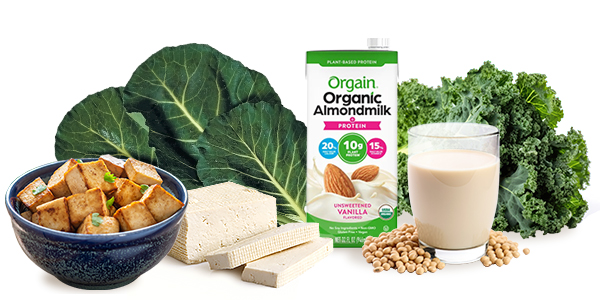
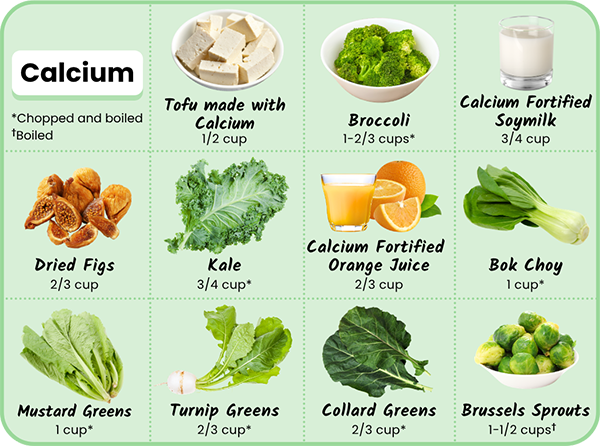
Calcium recommendations. Vegan adults should eat 4 servings of good sources of calcium per day (5 for women over 50 and everyone over 70), and anyone aged 9 to 18 should eat 6 servings. The image below shows how much of each food counts as one serving:
Why it matters for vegans. In studies that counted only calcium from food (including fortified foods), adult vegans averaged 847 mg per day, compared with 1,093 mg for adult meat-eaters. In the U.K.’s EPIC-Oxford study, vegans had a higher rate of hip fractures than meat-eaters; lower calcium intake accounted for about a fifth of the difference. The study was observational and doesn’t prove the diet caused the fractures, but until we know more, it’s a good reason to make an effort to meet calcium recommendations.
Calcium supplements. If eating calcium-rich foods every day is inconvenient, a supplement of about 500 mg per day is another option. For most people, there’s no reason to believe a supplement of 500 to 1,000 mg per day is harmful. The best research found no increase in heart disease, at least in women; there’s less research on men. Calcium with vitamin D may slightly raise the risk of kidney stones, and calcium can reduce how much iron you absorb from a meal and interfere with a few medications.
Exercise. Lifting heavy weights twice a week, along with impact exercise such as jumping or running, may be the most reliable way to maintain or increase bone density without medication. More than 95% of hip fractures follow a fall, and balance-focused exercise programs reduce falls. We encourage everyone to do both strength and balance exercise, and to talk to a health professional first, especially if you already have low bone density.
For the details, read the full article: Calcium and Bone Health.